 Ngorongoro Crater Tour
Home › Guides › Ngorongoro Crater Weather: When Is the Best Time to Visit for a Safari?
Ngorongoro Crater Weather: When Is the Best Time to Visit for a Safari?
Ngorongoro Crater weather is best for a safari from June to October, the dry season, when crater floor afternoons sit around 19C/66F and the short grass makes animals easy to spot. This guide covers the weather month by month, the gap between the warm floor and the cold rim, the rains, the migration months and what to pack for an early game drive.
Quick answer Best months, rim cold and rains at a glance
Go from June to October for dry tracks, short grass and afternoons near 19C/66F on the crater floor. The wet season from November to May is greener and good for flamingos, with a dry spell in January and February. The rim is always colder than the floor and can freeze at night in the dry season.
Key takeaways
- A one-day Ngorongoro Crater Day Trip from Arusha gives you about 10 hours, so start early and dress for a cold rim.
- Compare every day trip and multi-day safari on the ngorongoro crater tour guide before you pick your month.
- Visiting in the calving months? The 3-Day Serengeti and Ngorongoro Group Camping Safari pairs the crater with the Serengeti.
- Crater gates open at 06:00, per the NCAA, and early mornings on the rim are often misty.
What Is the Best Time to Visit Ngorongoro Crater?
The best time to visit Ngorongoro Crater for a safari is the dry season from June to October, when the grass is short and wildlife is easy to spot.
The NCAA splits the year into a wet season from November to May and a dry season from June to October. The area stays open all year, including the rainy season, so the question is which trade-off suits your trip, not whether you can go.
Why the dry season wins for most crater days
From June to October the grass on the crater floor is short, which TourRadar names as the time for good wildlife spotting. On a crater day you never leave the vehicle except in designated areas, so a clear view across short grass matters more here than in parks where you can walk.
The NCAA says the coldest months are June to August. Those are also prime dry season months, so a dry season visit means warm afternoons on the floor and a genuinely cold start on the rim.
When the wet season is the better choice
The wet season from November to May brings higher lake water levels, which TourRadar calls a good time to see flamingos. Lake Magadi on the crater floor is often home to thousands of lesser flamingos, per the NCAA. Afternoons on the floor are warmer too, around 23C/73°F according to SafariBookings.
The trade-off is mud. The NCAA advises a 4x4 in muddy periods. Only 4x4 vehicles up to 3,500 kg are allowed on the crater floor anyway, so every crater safari vehicle already meets that rule.
Sources: Ngorongoro Conservation Area Authority, Ngorongoro Conservation Area Authority, NCAA tourism activities.
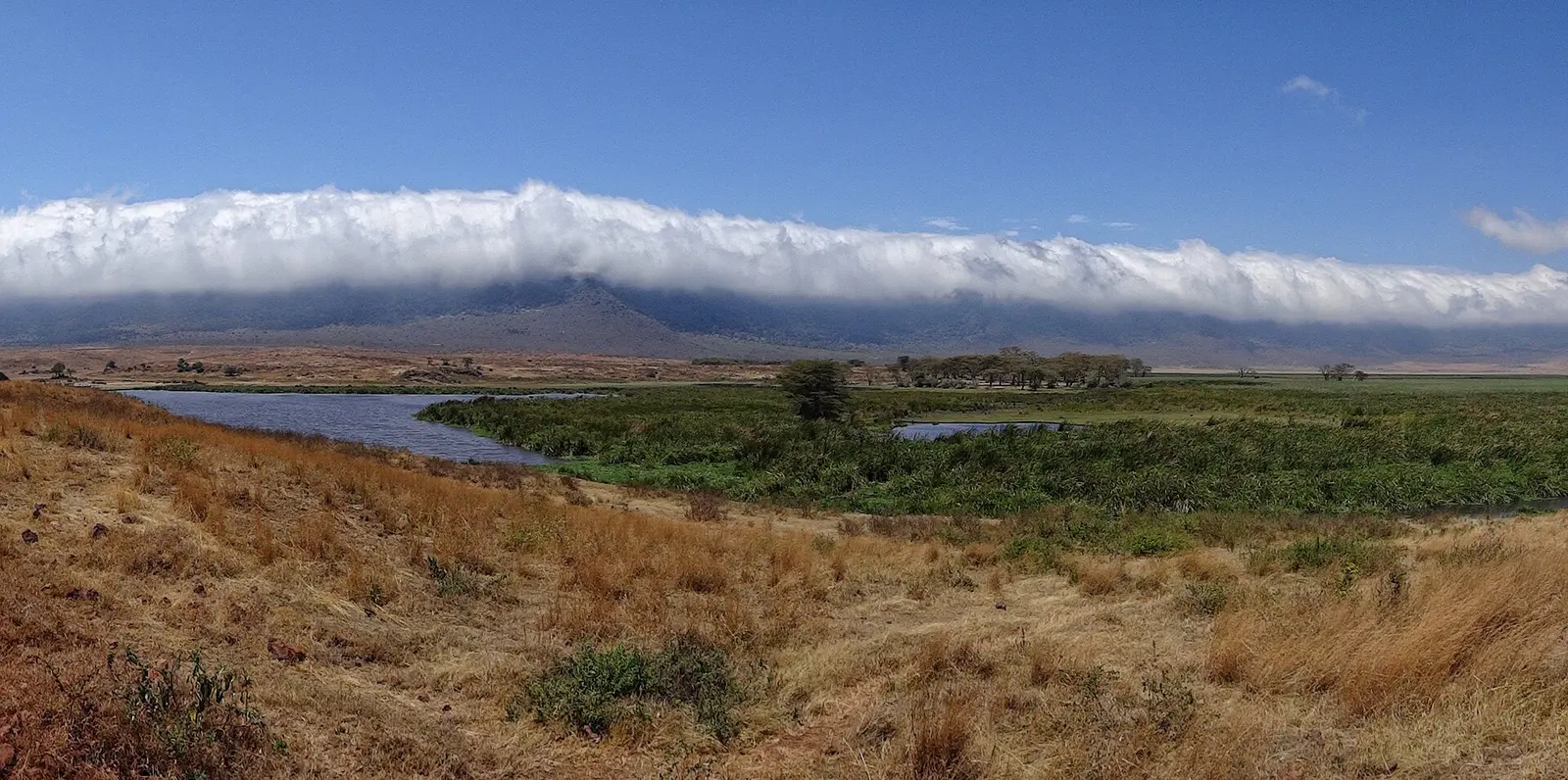
Cloud often sits on the rim while the floor stays dry and bright, so the weather at the gate is not always the weather at the bottom. Photo: Bjørn Christian Tørrissen, CC BY-SA 3.0, via Wikimedia Commons
What Is the Ngorongoro Crater Weather by Month?
January and February bring a dry spell, March to May the long rains, June to October the dry and cold season, and November to December the short rains.
No single source publishes a month-by-month walkthrough that ties weather to the safari day, so the table below sets each month's typical conditions next to what they mean for your game drive. Temperatures are the typical afternoon on the crater floor and the typical night on the rim.
Month by month for a crater safari
Use the last column to decide. A cold rim night matters if you sleep up top before the descent, and the rains matter most if you only have one day in the crater.
| Month | Season | Floor afternoon | Rim at night | Safari trade-off |
|---|---|---|---|---|
| January | Dry spell between the rains | About 23C/73°F | About 6C/43F | Green crater, migration herds nearby, a good gap in the rain |
| February | Dry spell between the rains | About 23C/73°F | About 6C/43F | Calving season at Ndutu, combine the crater with the plains |
| March | Long rains | About 23C/73°F | About 6C/43F | Migration still near, wetter tracks and more cloud |
| April | Long rains | About 23C/73°F | About 6C/43F | Wet tracks, flamingos on fuller lakes |
| May | Long rains | About 23C/73°F | About 6C/43F | Last of the long rains, lush and green |
| June | Dry season | About 19C/66F | Can freeze | Short grass, coldest months begin |
| July | Dry season | About 19C/66F | Can freeze | Easy wildlife spotting, warm layers for dawn |
| August | Dry season | About 19C/66F | Can freeze | Still in the coldest stretch, dry tracks |
| September | Dry season | About 19C/66F | Can freeze | Short grass, lower lakes with fewer birds |
| October | Dry season | Dry and mild | Can freeze | Last dry month before the short rains |
| November | Short rains | About 23C/73°F | About 6C/43F | Rains return, scenery turns green |
| December | Short rains | About 23C/73°F | About 6C/43F | Migration arrives, calving season begins on the plains |
Sources: Ngorongoro Conservation Area Authority, Ngorongoro Conservation Area Authority.
When Are the Short Rains and the Long Rains?
The short rains fall from November to December and the long rains from March to May, with a dry spell in January and February between them.
SafariBookings describes the crater as having a mild temperate climate with two rainy periods. Knowing which is which helps you pick a wet season date that still gives you a good day on the floor.
How the rains change a crater day
The long rains run for three months, from March to May, so this is the stretch to skip if dry tracks matter most to you. The short rains from November to December come as the migration herds move into the area.
January and February usually have a dry spell between the rains. That gap is the best wet season choice: the crater is green, the lakes are fuller than in the dry season and you are close to the calving plains.
The gates keep the same hours in every season. The NCAA lists crater gates from 06:00 to 16:00, so rain does not buy you extra time on the floor. Plan to be down early and use the morning.
Sources: Ngorongoro Conservation Area Authority, Ngorongoro Conservation Area Authority.
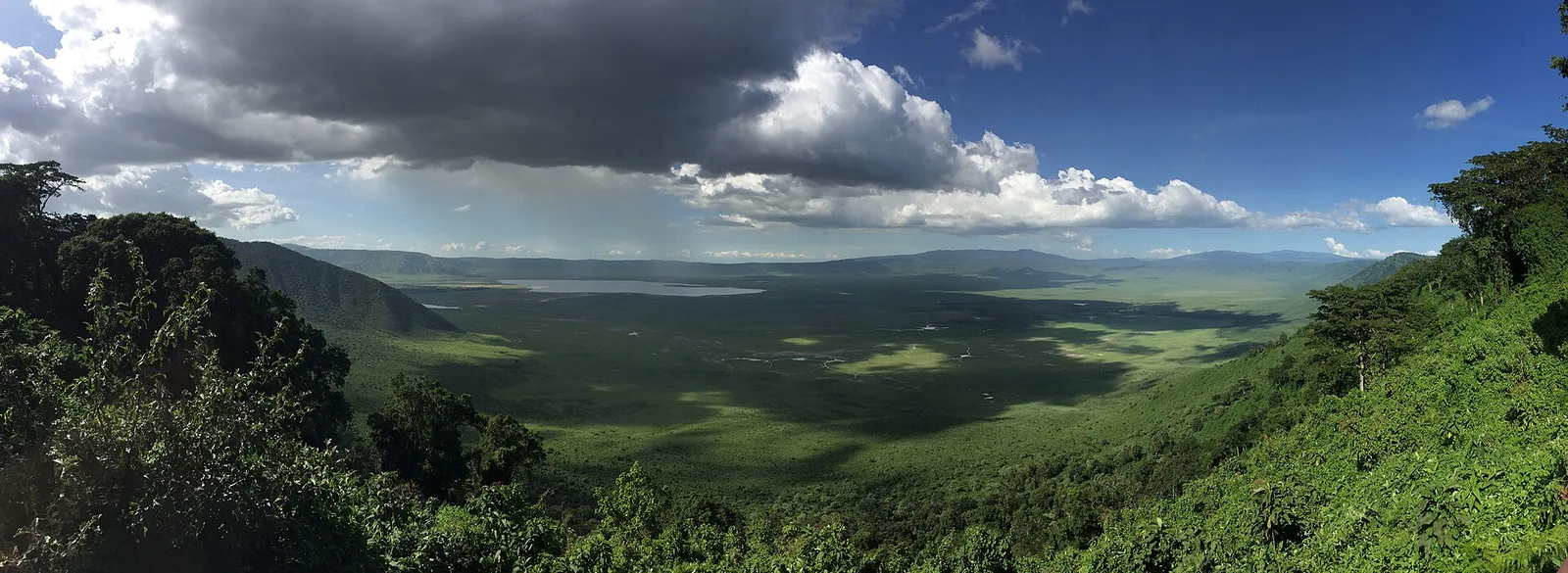
A rain shower drifting over the green crater floor, with sun still lighting patches of grass. Photo: PLBechly, CC BY-SA 4.0, via Wikimedia Commons
How Cold Does the Crater Rim Get at Night?
The rim can freeze at night from June to September and sits around 6C/43F at night in the wet season.
The crater floor and the crater rim feel like two different climates. The caldera is 610 metres deep, per the NCAA, and TourRadar notes that temperatures drop by nearly 7C for every 1,000 metres climbed.
Floor versus rim
The NCAA says temperatures are always lower along the rim than on the crater floor, and nights are cold. Across the whole conservation area it gives a range of 3°C to 35°C depending on altitude.
This matters if you sleep on the rim before your descent. You wake in the cold, drive down into a warmer bowl, then climb back up before the gates close. A day that starts in a jacket often ends in a T-shirt on the floor.
| Season | Crater floor afternoon | Crater rim at night |
|---|---|---|
| Dry season, June to September | About 19C/66F | Can freeze |
| Wet season, November to May | About 23C/73°F | About 6C/43F |
Sources: Ngorongoro Conservation Area Authority, Ngorongoro Conservation Area Authority.
What Is Ngorongoro Crater Weather Like in July, August and September?
July, August and September are dry, with afternoons usually around 19C/66F on the crater floor and nights that can freeze on the rim.
These three months sit at the heart of the dry season, and they are the months most travellers pick for a crater safari.
Ngorongoro Crater weather in July and August
The NCAA names June to August as the coldest months. In July and August expect the coldest dawns of the year on the rim, often with mist, and dry, clear afternoons on the floor. Grass is short and spotting is easy.
Ngorongoro Crater weather in September
September keeps the same pattern, with afternoons around 19C/66F per SafariBookings. Lake levels are lower in the dry season, which TourRadar links to fewer bird opportunities, so September suits a big game focus more than a birding one. Book a full day such as the Private Ngorongoro Crater Day Safari from Arusha, which runs 11 hours, to use every hour of the dry season light.
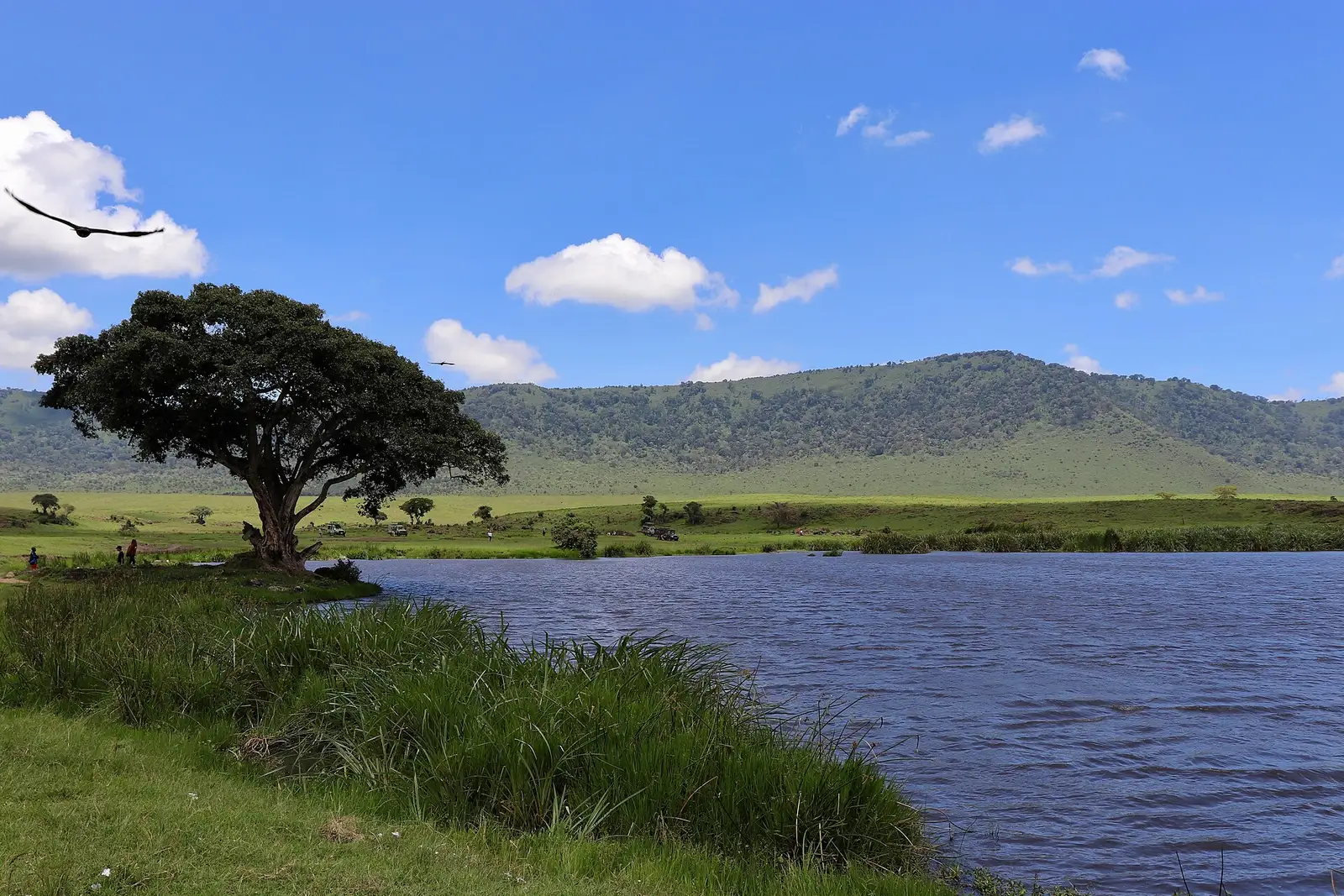
A clear March midday on the crater floor, when the grass is green and the water is high. Photo: James Wagner, CC BY-SA 4.0, via Wikimedia Commons
Tours That Fit
Day trips and short safaris that work in every season.
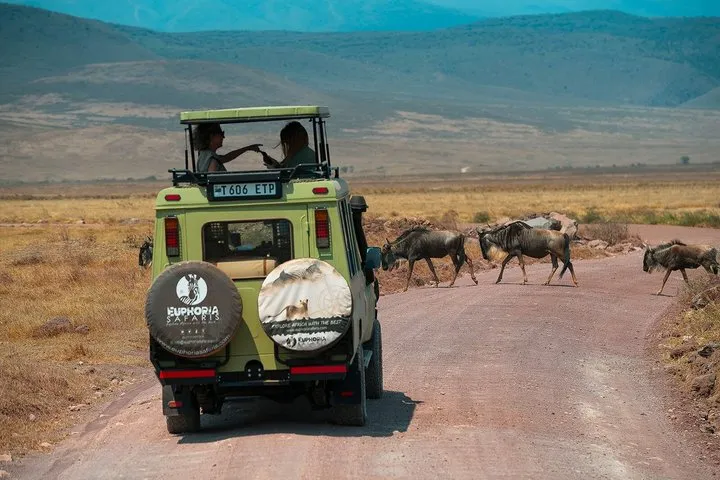 from $325
Most booked day trip
Ngorongoro Crater Day Trip from Arusha
The most-booked crater day trip: a small group of up to 6 from Arusha, with every fee and tax in the price.
Check Availability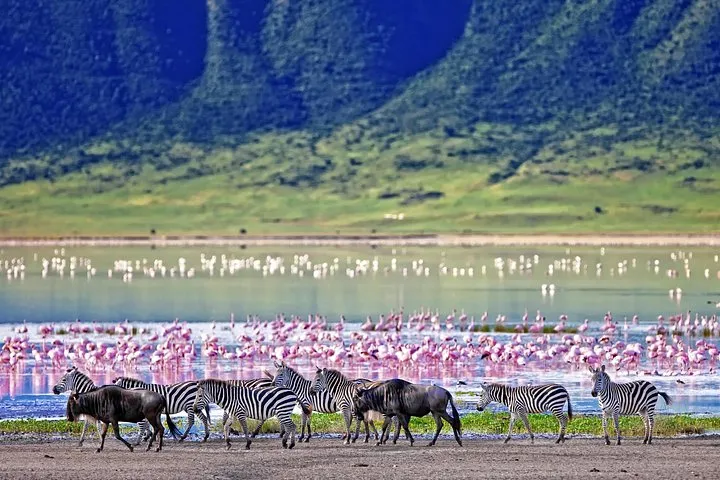 from $300
Shared Group Ngorongoro Crater Day Trip
A shared day trip for up to 7 travellers from Arusha, lunch and all fees included.
Check Availability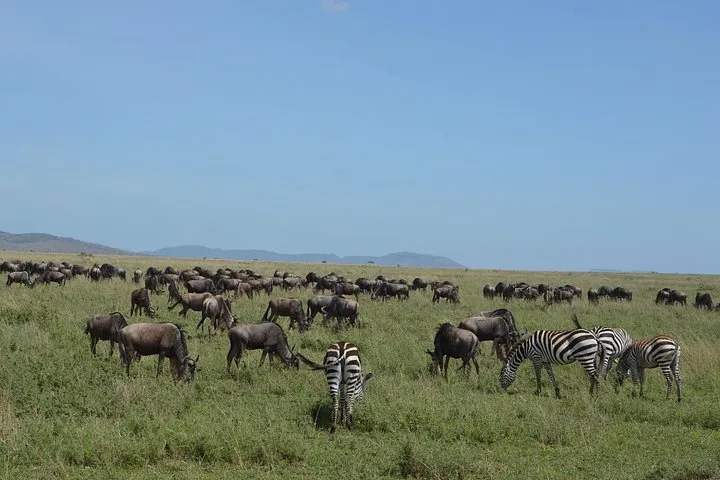 from $770
Most reviewed
3-Day Serengeti and Ngorongoro Group Camping Safari
The most-reviewed safari here: 3 days of group camping in the Serengeti and on the crater rim, up to 7 people.
Check Availability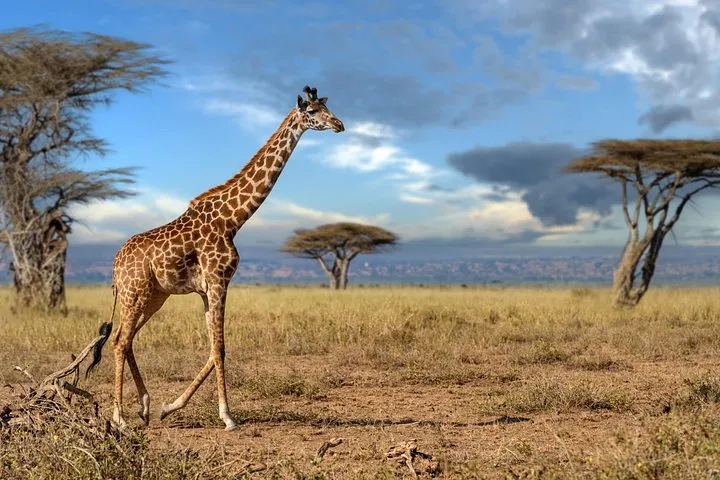 from $1,750
Mid-range lodges
4-Day Tarangire, Serengeti and Ngorongoro Mid-Range Safari
Four days with three nights in mid-range lodges and camps, for a small group of up to 7.
Check AvailabilityIs December a Good Month to Visit?
December is a good month if you want the migration nearby and green scenery, as long as you accept the short rains.
December brings two things at once: the short rains and the arrival of the herds.
Ngorongoro Crater weather in December
December falls in the short rains of November to December, with floor afternoons around 23C/73°F per SafariBookings. TourRadar says the Great Migration passes through Ngorongoro between December and March.
The NCAA says Ndutu is the calving area, with the best time to see the migration from late December to April. If December is your month, a multi-day trip such as the 4-Day Tarangire, Serengeti and Ngorongoro Mid-Range Safari at $1,750 per person gives you the crater plus time on the plains, so one wet afternoon does not cost you the whole trip.
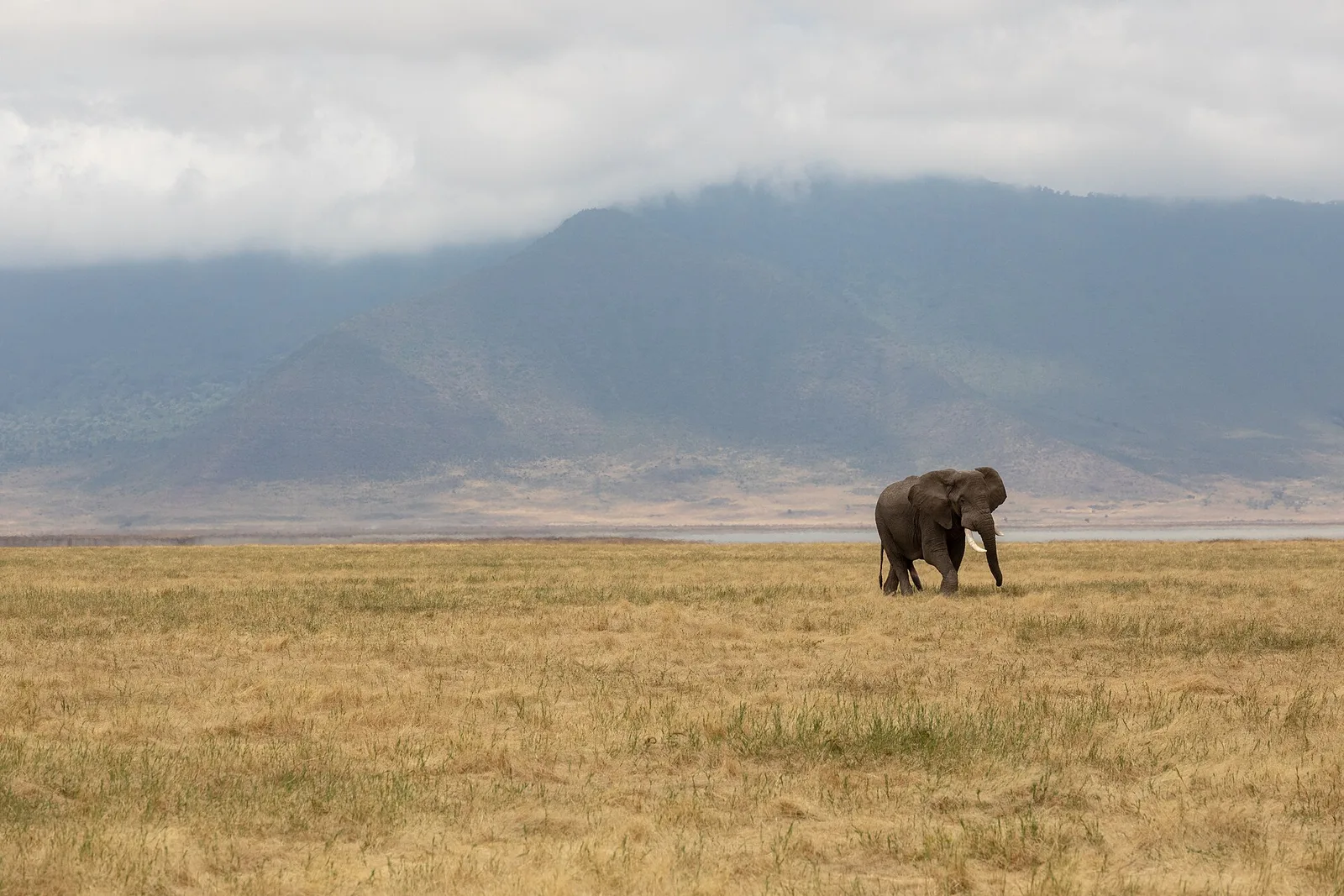
Dry grass on the floor and cloud on the wall, a typical look for the crater in the dry months. Photo: Zenith4237, CC BY-SA 4.0, via Wikimedia Commons
What Is the Best Time to Visit Ngorongoro Crater for Wildlife?
For big game the dry season from June to October is best, for flamingos the wet season is best, and for the migration aim for December to March.
The NCAA says the crater is home to over 25,000 animals, including the big five, and that with the exception of giraffes most species can be found on the crater floor. Those animals live in the crater all year, so the season changes how you see them, not whether they are there.
Match the month to what you want to see
Pick the season by your priority. Every option below still includes the resident crater animals.
| Priority | Best months | Why |
|---|---|---|
| Big game in clear view | June to October | Short grass and good wildlife spotting |
| Flamingos | November to May | Higher lake water levels |
| Great Migration | December to March | The herds pass through Ngorongoro |
| Calving at Ndutu | Late December to April | Ndutu is the calving area |
| A dry gap in the wet season | January and February | A dry spell between the rains |
Sources: Ngorongoro Conservation Area Authority, Ngorongoro Conservation Area Authority.
What Should You Wear for an Early Morning Game Drive?
Bring warm layers, because warm clothing for early morning game drives is a necessity when the rim is covered in mist.
SafariBookings calls warm clothing for early morning game drives a necessity, because the rim is often covered in mist. Your crater day starts cold whatever the month.
A layering plan for the crater day
Start with a warm jacket and a hat for the rim at dawn. Wear a light layer underneath for the floor, where afternoons run from around 19C/66F in the dry season to around 23C/73°F in the wet season. In the rains add a waterproof shell.
Pack your day bag without plastic bags, which are not allowed in the conservation area per the NCAA. There is no restaurant inside the crater, only lunch boxes and booked hot lunch picnic spaces, so bring a warm drink if your operator does not supply one.
Sources: Ngorongoro Conservation Area Authority, Ngorongoro Conservation Area Authority.
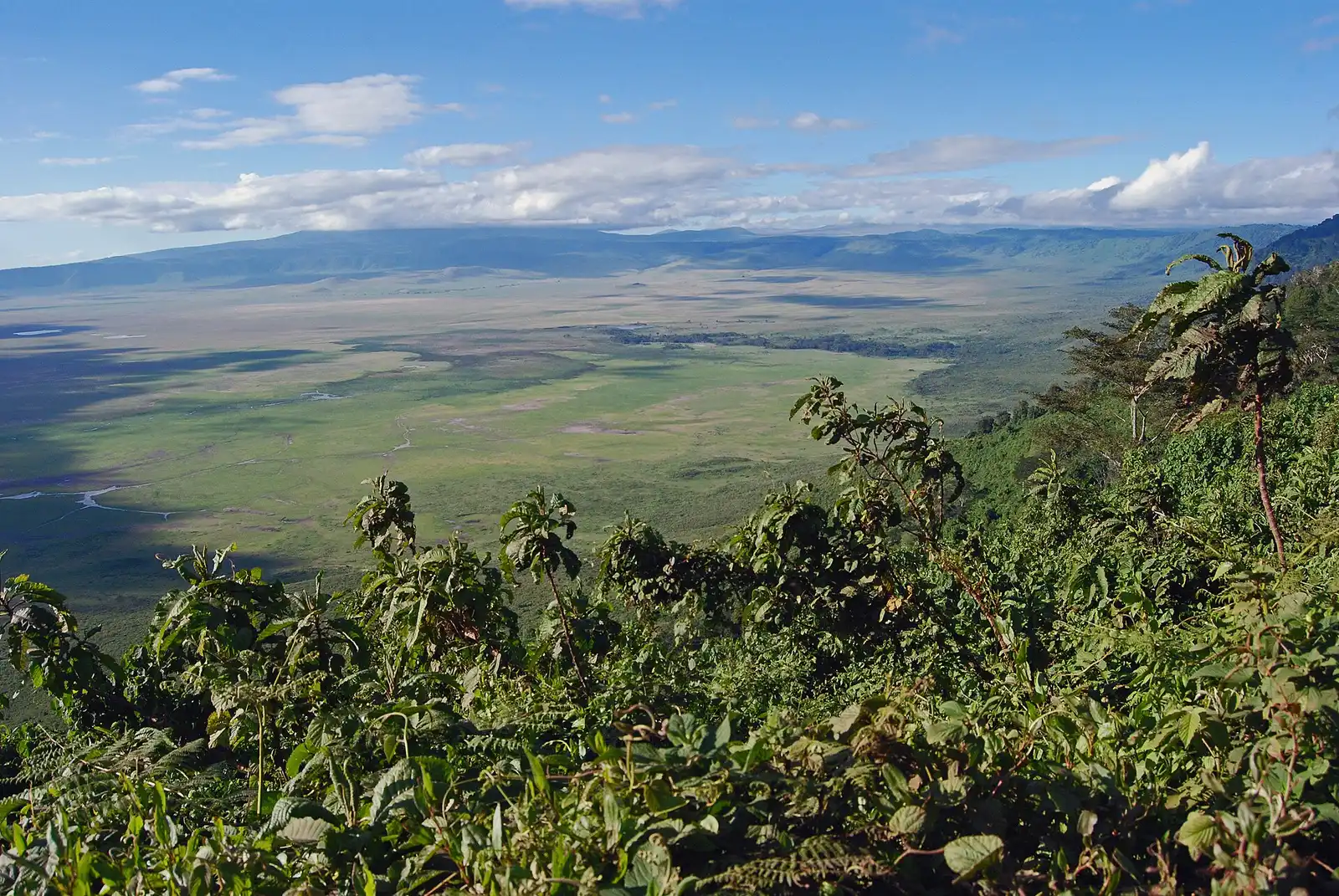
The rim forest sits well above the floor, which is why the rim is cold and damp while the floor is warmer. Photo: Harvey Barrison, CC BY-SA 2.0, via Wikimedia Commons
How Do You Check the Ngorongoro Crater Weather Forecast for 14 Days?
Use a live forecast such as AccuWeather, timeanddate or Weather.com for the next days, and use the seasons on this page to plan further ahead.
A forecast tells you about the next few days, and the season tells you about the trip you are booking months ahead. Use both.
Where to find the live forecast
AccuWeather gives an hourly and 10-day view, timeanddate gives a 14 day extended forecast with highs and lows, and Weather.com gives a 10-day forecast for Ngorongoro.
Read wet season forecasts with care. Afternoon downpours and high rain chances are normal from November to May, so a rainy forecast is not by itself a reason to cancel. Get down to the floor early, when the gates open, and keep the wettest hours for the drive back up.
Ngorongoro Crater Weather FAQ
When to visit Ngorongoro Crater?
Visit from June to October for the dry season and the best game viewing, or January and February for a dry spell in the green season. Compare trips on the ngorongoro crater tour guide.
What is the best time to go to Ngorongoro Crater?
The dry season from June to October, when the grass is short and afternoons sit around 19C/66F, per SafariBookings.
Is the crater open in the rainy season?
Yes. The NCA is open throughout the year, including the rainy season, and a 4x4 is advised in muddy periods, per the NCAA FAQs.
When does the Great Migration pass through Ngorongoro?
Between December and March, per TourRadar, with calving at Ndutu from late December to April.
What are the coldest months at Ngorongoro Crater?
June to August, per the NCAA, and the rim can freeze at night.
Is there a budget day trip that works in any season?
The Budget Ngorongoro Crater Day Trip from Moshi or Arusha starts at $115 per person, plus $169 per person in park fees and VAT paid in cash the day before.
More Guides
- 2-Day Tanzania Safari to Tarangire and the Ngorongoro Crater
2-day safaris from Arusha with 1 night out, compared on crater fees and where you sleep in 2027. Pick the one that fits.
- 3-Day Tanzania Safari With the Ngorongoro Crater
3-day Tanzania safari routes for 2027: 2 nights, the crater plus Serengeti or Tarangire and Manyara. Compare what each trip covers.
- 5-Day Tanzania Safari: Tarangire, Serengeti and the Ngorongoro Crater
5-day Tanzania safari routes for 2027: 4 nights, Tarangire, Serengeti and the crater. See what each trip includes and pick yours.