 Ngorongoro Crater Tour
Home › Guides › How Big Is the Ngorongoro Crater? Size, Depth and What It Means for Your Safari
How Big Is the Ngorongoro Crater? Size, Depth and What It Means for Your Safari
The Ngorongoro Crater size is often confused with the whole conservation area, but the crater itself is only about 20 kilometres across with a floor of about 260 km², inside an area UNESCO puts at 809,440 hectares. This guide covers the diameter, depth and floor, why sources disagree, the largest-caldera claim, the wildlife on the floor and what the size means for your crater day and its fees.
Quick answer Diameter, depth, floor and the safari day
The NCAA puts the crater at about 20 kilometres in diameter and 610 metres deep, with a floor of about 260 km². That floor is small enough to cover in one game drive, which is why most visitors see it on a single day inside a much larger conservation area.
Key takeaways
- A floor of about 260 km² fits one day, like the Ngorongoro Crater Day Trip from Arusha at 10 hours.
- The Shared Group Ngorongoro Crater Day Trip runs 6-8 hours, enough for the floor at the 25 km/h crater limit.
- The crater service fee is per vehicle, so check which tours include it in the ngorongoro crater tour comparison.
- Pair the crater with the Serengeti next door on the 3-Day Serengeti and Ngorongoro Group Camping Safari.
Is the Ngorongoro Crater the Same as the Ngorongoro Conservation Area?
No, the crater floor covers about 260 km², while UNESCO gives the whole Ngorongoro Conservation Area as 809,440 hectares, about 8,094 km².
This is the most common mix-up about the crater's size. The famous bowl is one feature inside a far larger protected area that also holds the Empakaai Crater and the Ndutu calving area.
Crater versus conservation area
The two figures describe different things:
| Feature | Size | Source |
|---|---|---|
| Crater floor | about 260 km² | NCAA |
| Crater diameter | about 20 km | NCAA |
| Whole conservation area | 809,440 ha (about 8,094 km²) | UNESCO |
Why it matters for your booking
The NCA entry permit of USD 70.80 per non-East African adult covers entry to the conservation area. Driving down to the floor is a separate step, charged as a crater service fee of USD 295 per vehicle per trip, per the NCAA tariff. A permit once issued is valid for one entry within 24 hours only.
So the size you pay to see on a crater day is the floor, not the whole area.
Sources: Ngorongoro Conservation Area Authority, UNESCO World Heritage Centre, Ngorongoro Conservation Area Authority.
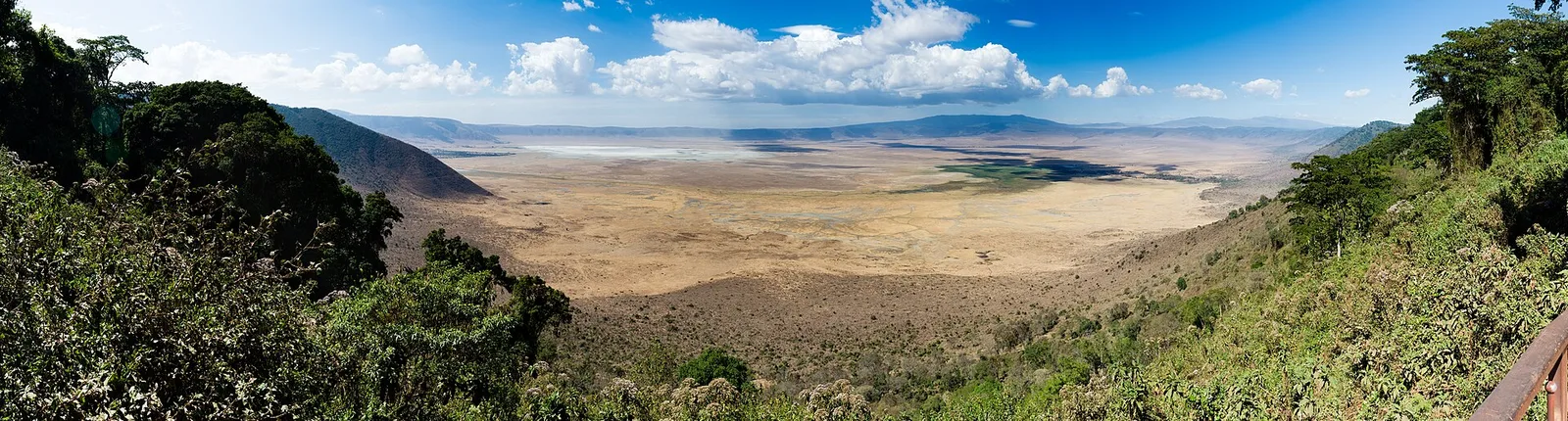
From the rim the floor is wide enough that the far wall is a low line on the horizon. Photo: Christoph Strässler, CC BY-SA 2.0, via Wikimedia Commons
How Big Is the Ngorongoro Crater in Kilometres?
The crater is about 20 kilometres in diameter per the NCAA, with walls between 400 and 610 metres high and a floor of about 260 km².
Different sources round the numbers differently, so here is each figure next to who gives it.
Ngorongoro Crater size figures by source
Diameter, depth and floor area as published:
| Measure | Figure | Source |
|---|---|---|
| Diameter | about 20 km | NCAA |
| Diameter | 16 to 19 km (10 to 12 miles) | Go2Africa |
| Wall height | 400 to 610 m (1,312 to 2,000 feet) | Go2Africa |
| Caldera depth | 610 m | NCAA |
| Floor area | about 260 km² | NCAA |
| Floor area | 264 km² (102 square miles) | Go2Africa |
A size you can picture
Micato describes the crater as the size of 75 Central Parks, and says the floor sits 2,000 feet below the rim viewpoint. From the rim, the whole floor is in view at once, which is the moment most travellers remember. The descent road drops through that wall height before the game drive starts.
Map of the Ngorongoro Crater and Its Neighbours
The crater is one part of the conservation area: Empakaai lies to the north-east and Olduvai Gorge to the west.
- 1 Ngorongoro CraterA 260 km² caldera floor, 610 m below the rim.
- 2 Empakaai CraterA smaller crater in the conservation area.
- 3 Olduvai GorgeOn the road between the crater and the Serengeti.
- 4 KaratuThe town below the crater rim.
Numbers match the pins on the map.
Coordinates: Wikipedia and Wikidata.
Why Do Sources Give Different Sizes for the Crater?
Sources measure the rim at different points, so the diameter runs from 16 to 19 kilometres in most accounts to about 20 km at the NCAA and closer to 22 kilometres in a few.
A caldera rim is not a neat circle. Where you put the tape changes the number.
The spread explained
Ryder Signature notes that most commonly cited figures put the crater at roughly 16 to 19 kilometres across, with a floor area of approximately 260 square kilometres and walls rising 400 to 610 metres. A small number of sources give a wider diameter figure closer to 22 kilometres depending on where the rim is measured.
The wall height range works the same way. The rim rises and falls, so the drop from rim to floor is about 400 metres in some places and 610 metres in others. None of these figures is wrong. They describe a bowl with an uneven edge.
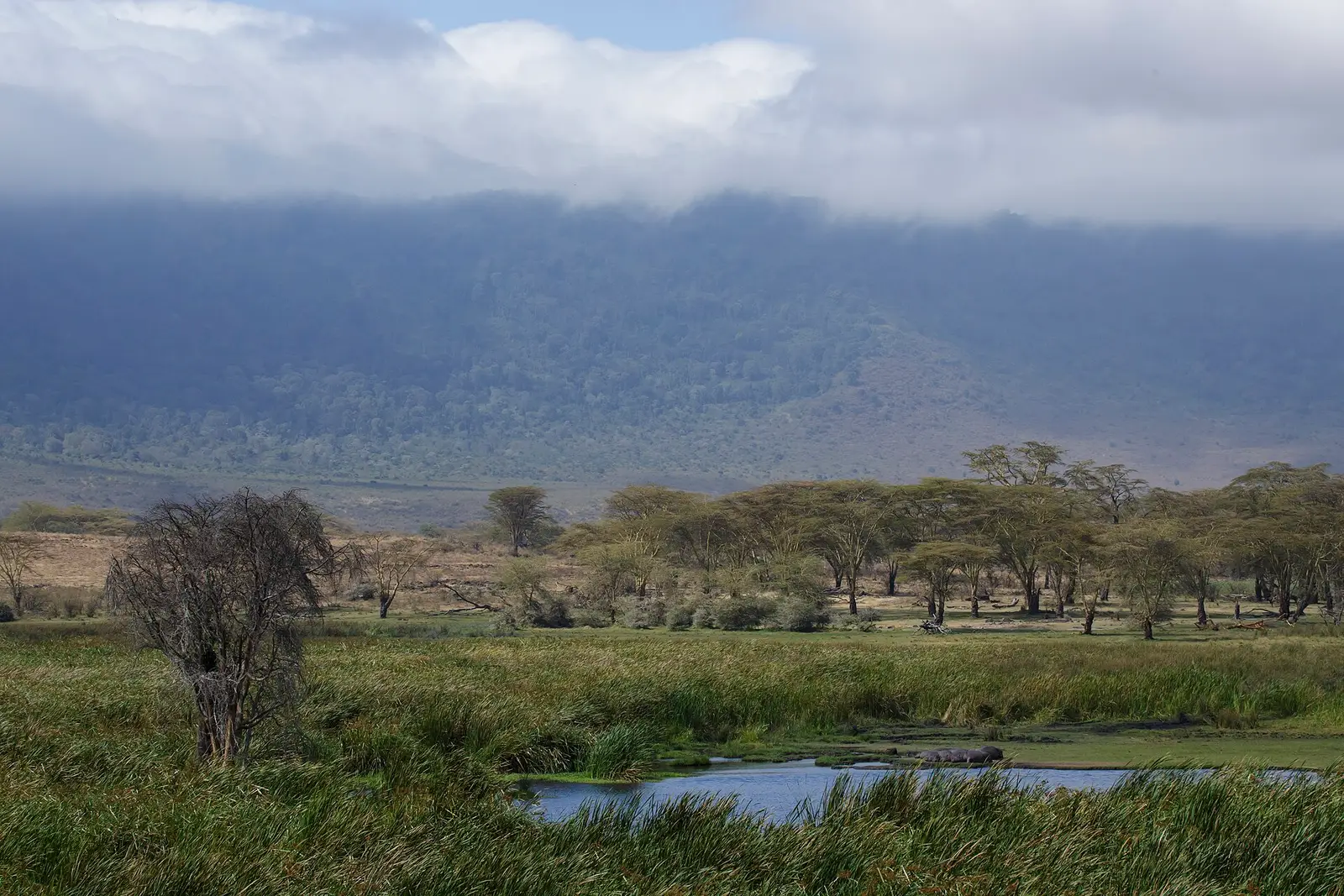
The steep wall closes the bowl on every side and rises several hundred metres above the floor. Photo: Thomas Fuhrmann, CC BY-SA 4.0, via Wikimedia Commons
Is Ngorongoro the Largest Crater in the World?
UNESCO describes Ngorongoro as the world's largest caldera and, under criterion (viii), the largest unbroken caldera in the world.
The precise claim is about an intact caldera, a volcano that collapsed in on itself and kept its full ring of walls.
What makes it unbroken
The crater formed about 2.5 million years ago when a large volcano collapsed, per the NCAA. Go2Africa calls it the biggest intact (unbroken) volcanic caldera on Earth and notes that it has not filled with water. Natural Habitat Adventures adds that the floor holds a lake large enough to support a variety of life, but it does not flood the crater.
That dry, enclosed floor is what makes a crater game drive work: grassland, wetland and forest in one bowl. The name fits too. It comes from the Maasai phrase orgirra le kkorongorro, meaning Big Bowl.
Sources: UNESCO World Heritage Centre, Ngorongoro Conservation Area Authority.
Tours That Fit
Day trips sized for the crater floor, and a route that adds the Serengeti next door.
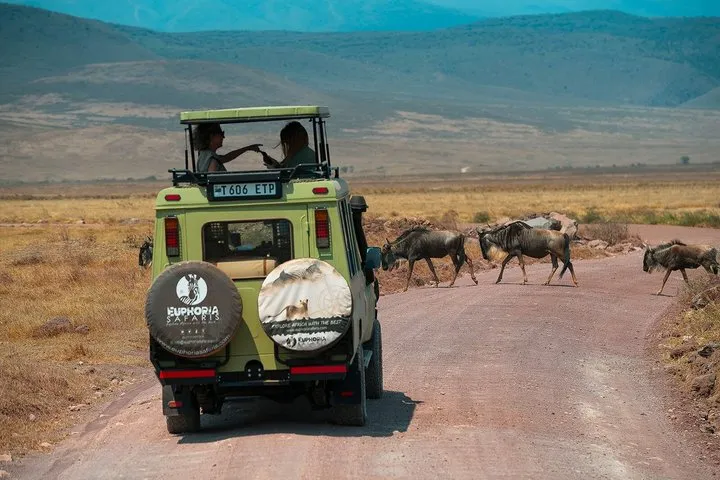 from $325
Most booked day trip
Ngorongoro Crater Day Trip from Arusha
The most-booked crater day trip: a small group of up to 6 from Arusha, with every fee and tax in the price.
Check Availability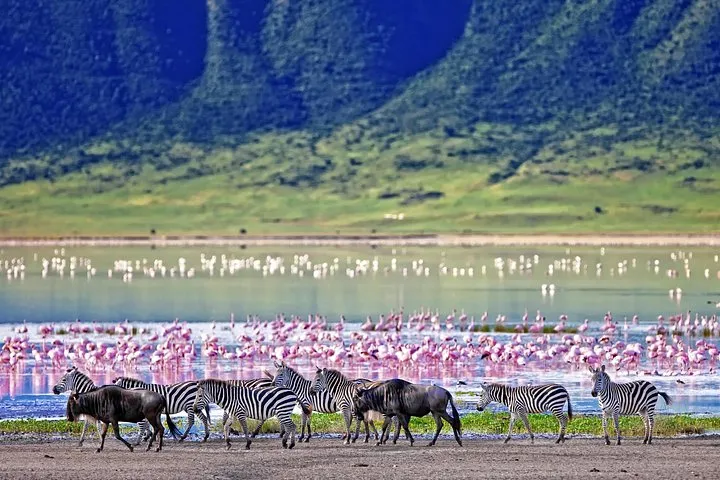 from $300
Shared Group Ngorongoro Crater Day Trip
A shared day trip for up to 7 travellers from Arusha, lunch and all fees included.
Check Availability from $770
Most reviewed
3-Day Serengeti and Ngorongoro Group Camping Safari
The most-reviewed safari here: 3 days of group camping in the Serengeti and on the crater rim, up to 7 people.
Check AvailabilityIs Ngorongoro Crater in the Serengeti?
No, Ngorongoro Crater is in the Ngorongoro Conservation Area, whose western part abuts Serengeti National Park.
The two are neighbours, not one park. Wikipedia places the conservation area 180 km (110 mi) west of Arusha.
Ngorongoro Crater location for planning
The main entry gate, Loduare, is 14 km from Karatu town. The NCAA gives the distance to the NCA as 173.8 km from Arusha Airport and 227.3 km from Kilimanjaro International Airport. A crater day from Arusha, such as the Private Ngorongoro Crater Day Safari from Arusha at 11 hours, covers that drive both ways plus the floor.
Because the Serengeti sits next door, many multi-day routes pair the two, like the 4-Day Tarangire, Serengeti and Ngorongoro Mid-Range Safari.
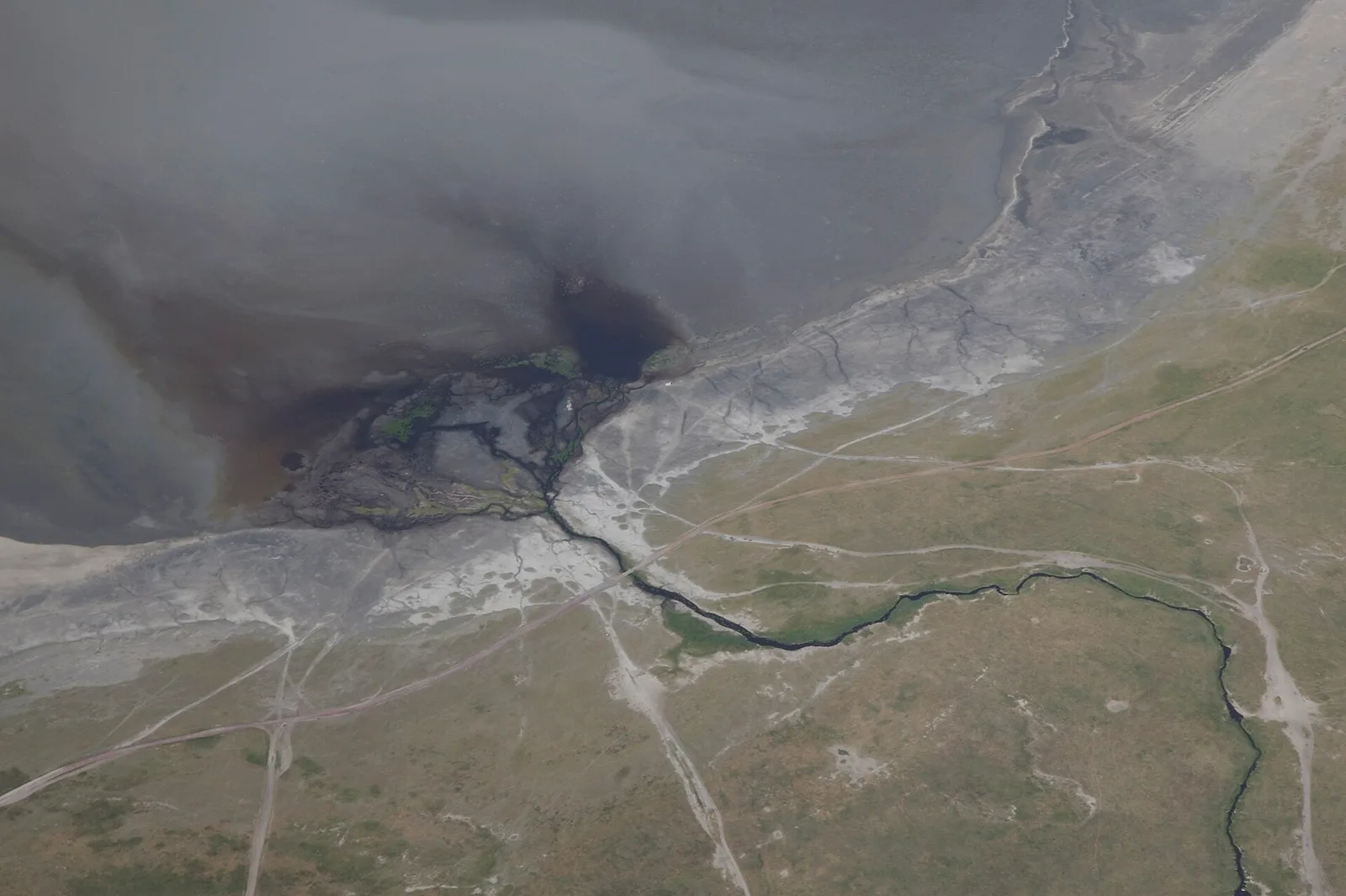
Lake Magadi from the air, the shallow soda lake in the middle of the crater floor. Photo: Calle v H, CC BY 2.0, via Wikimedia Commons
How Many Animals Live on the Ngorongoro Crater Floor?
The NCAA says the crater is home to over 25,000 animals, including the big five, and Go2Africa gives almost 30,000 large mammals.
A small floor with that many animals is why the crater feels so busy with wildlife. Sightings are never guaranteed, but density works in your favour.
Wildlife density on a small floor
With the exception of giraffes, most NCA species can be found on the crater floor, per the NCAA. UNESCO says the NCA has the densest known lion population in Africa, estimated at 68 in 1987. Lake Magadi, a salt lake on the floor, is often home to thousands of lesser flamingos.
The floor rules keep the crowd in check. A maximum of 5 vehicles may gather at a sighting, vehicles must keep at least 25 metres from animals, and visitors must stay in their vehicles except in designated areas. Walking safaris are not allowed inside the crater.
Sources: Ngorongoro Conservation Area Authority, Ngorongoro Conservation Area Authority, UNESCO World Heritage Centre, NCAA tourism activities, Ngorongoro Conservation Area Authority.
Why Are There No Giraffes in the Ngorongoro Crater?
The NCAA names giraffes as the one exception among NCA species found on the crater floor, so you see them in the wider conservation area instead.
The NCAA gives no reason for it. The floor is ringed by walls 400 to 610 metres high, and the giraffes of the NCA live outside that ring.
What this means on safari
If giraffes are on your list, plan time outside the crater. Routes that add the Serengeti or Tarangire, such as the 2-Day Tarangire and Ngorongoro Private Camping Safari, give you that wider landscape.
What Is the Rarest Animal to See in the Ngorongoro Crater?
The black rhino is the rarest, as the only species the IUCN lists as endangered among the NCA's wildlife, per the NCAA.
UNESCO lists black rhino, wild hunting dog and golden cat as endangered species in the NCA. Of those, the black rhino is the one crater visitors hope for.
How the size helps
A floor of about 260 km² is small enough that a guide can cover the grassland and the wetland edges in one drive. That raises the odds of a rhino sighting but never guarantees it. Bring binoculars, because vehicles must keep at least 25 metres from animals.
Sources: Ngorongoro Conservation Area Authority, UNESCO World Heritage Centre, Ngorongoro Conservation Area Authority, Ngorongoro Conservation Area Authority.
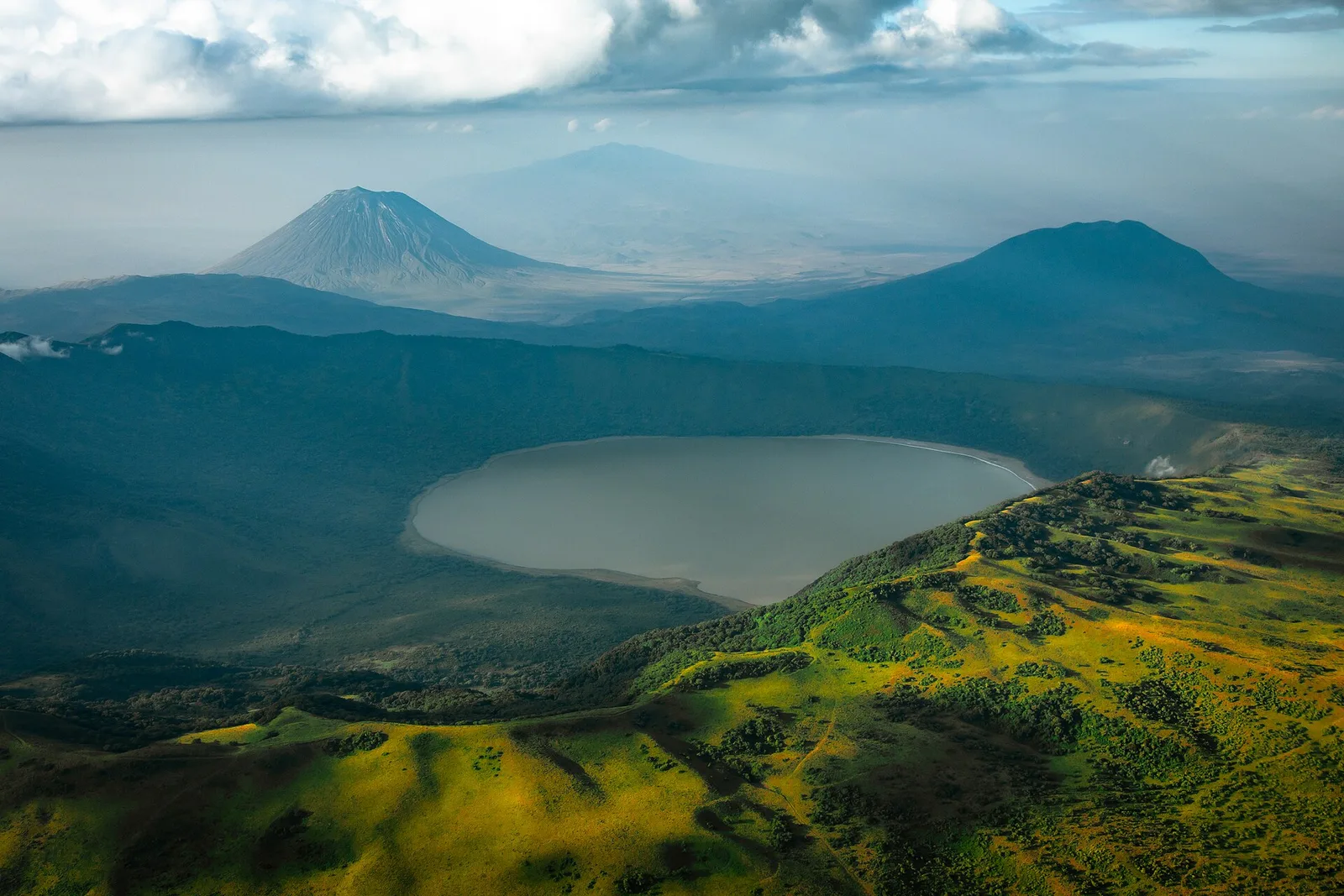
Empakaai, a smaller caldera north of the main crater, with Ol Doinyo Lengai on the horizon. Photo: Daniel Msirikale, CC BY-SA 4.0, via Wikimedia Commons
How Long Does It Take to See the Crater Floor?
One day is enough for the crater floor, and the day trips on this site run from 6-8 hours to 11 hours door to door.
The size sets the plan. At the 25 km/h crater speed limit, the floor is a full morning or day of driving, not a week.
Day lengths and fees, compared
The crater fees column shows whether the NCA entry and crater service fee are inside the listed price:
| Tour | Price | Length | Crater fees |
|---|---|---|---|
| Ngorongoro Crater Day Trip from Arusha | $325 per person | 10 hours | Included |
| Private Ngorongoro Crater Day Safari from Arusha | $350 per person | 11 hours | Included |
| Shared Group Ngorongoro Crater Day Trip | $300 per person | 6-8 hours | Included |
| Ngorongoro Crater Joining Group Day Trip | $380 per person | 9 hours | Included |
| Budget Ngorongoro Crater Day Trip from Moshi or Arusha | $115 per person | 1 day (about 6 hours in the crater) | Paid on top |
| 3-Day Serengeti and Ngorongoro Group Camping Safari | $770 per person | 3 days | Not stated on the listing |
| 5-Day Serengeti and Ngorongoro Private Safari | $2,845 per person | 5 days | Not stated on the listing |
Read the budget price carefully
The Budget Ngorongoro Crater Day Trip from Moshi or Arusha lists $115, then adds $169 per person paid in cash the day before for the entrance fee, crater service fee and 18% VAT. For a listing marked not stated, ask the operator in writing before you pay. Crater descent gates close at 16:00 per the NCAA visitor guidelines, so an early start gives the floor the most time.
See every option on the ngorongoro crater tour homepage.
Sources: Ngorongoro Conservation Area Authority, Ngorongoro Conservation Area Authority.
Ngorongoro Crater Size Questions
How many rhinos are in the Ngorongoro Crater?
No rhino count is published by the NCAA or UNESCO, so treat any number you hear as an estimate. The NCAA lists the black rhino as the only IUCN-endangered species in the NCA. Compare crater days on the ngorongoro crater tour homepage.
How deep is the Ngorongoro Crater?
The NCAA gives the caldera as 610 metres deep, and Go2Africa puts the walls between 400 and 610 metres. The Ngorongoro Crater Joining Group Day Trip drives down to the floor.
How old is the Ngorongoro Crater?
It formed about 2.5 million years ago when a large volcano collapsed, per the NCAA. The Ngorongoro Crater Day Trip from Arusha spends the day on that floor.
Does anyone live inside the crater?
No one lived in the Ngorongoro and Empakaai Craters at the time of inscription, per UNESCO, while an estimated 20,000 Maasai lived in the wider area. Routes like the 3-Day Serengeti and Ngorongoro Group Camping Safari camp on the rim.
What vehicles can drive on the crater floor?
Only 4x4 vehicles up to 3,500 kg tare weight are allowed, except authorised trucks for organised groups. A private day such as the Private Ngorongoro Crater Day Safari from Arusha runs 11 hours in a vehicle that meets that rule.
More Guides
- Olduvai Gorge: How to Visit It on a Ngorongoro Crater Safari
Olduvai Gorge in 2027: over 60 hominin fossils, a museum and a stop between the crater and the Serengeti. Plan your visit here.
- 2-Day Tanzania Safari to Tarangire and the Ngorongoro Crater
2-day safaris from Arusha with 1 night out, compared on crater fees and where you sleep in 2027. Pick the one that fits.
- 3-Day Tanzania Safari With the Ngorongoro Crater
3-day Tanzania safari routes for 2027: 2 nights, the crater plus Serengeti or Tarangire and Manyara. Compare what each trip covers.